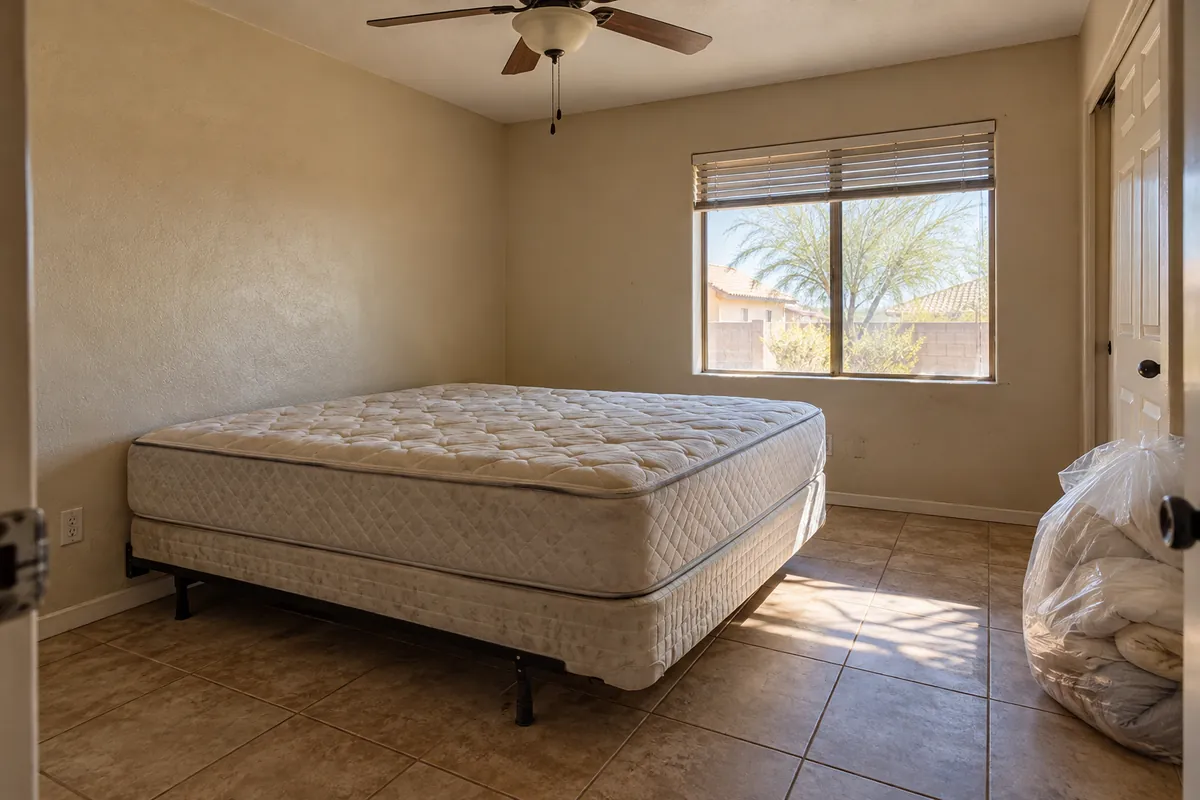
Nobody should treat for bed bugs in Allen, TX without confirming them first. The insects are small, flat and reddish-brown, and they shelter in mattress seams, bed frames, headboards and outlets, while bites alone prove nothing. Use Call Now, say what you found, and an independent provider serving 2 ZIP codes around Allen will inspect the room and then recommend heat, steam or residual treatment.
How to confirm bed bugs
- A faint sweet, musty odor in heavily infested rooms
- Pale shed skins and small white eggs near seams and under furniture
- Rust-colored or dark spots on sheets and mattress piping from crushed bugs and droppings
- Live bugs about the size of an apple seed in mattress seams, box springs, bed frame joints and headboard crevices
- Bites in lines or clusters, which are not proof on their own
Preparing for bed bug treatment
Bag clothing and bedding in sealed bags and run them through a hot dryer for the time the provider recommends. Move furniture away from walls, empty drawers if asked and keep items in the room. Do not bring bed bug-infested items into other rooms. Follow the provider's preparation list exactly, because skipped steps are the main reason treatments fail.
Preventing bed bugs when traveling and at home
- Inspect secondhand furniture and clothing before bringing it inside
- Seal cracks around baseboards and outlets if you live in an apartment
- Keep luggage on racks, away from beds and walls
- Wash and dry travel clothes on high heat as soon as you return
- Check mattress seams and headboards in hotels and rentals before unpacking
Do not throw out the mattress by reflex
Throwing furniture out tends to spread bed bugs around the building and is seldom needed. A mattress can be treated and put in an encasement. When something does have to go, wrap it in plastic, label it and book a pickup so that it does not carry the infestation elsewhere.
Bed bug treatment methods compared
| Method | How it works | Notes |
|---|---|---|
| Laundry and dryer heat | Hot wash and dry on high heat for bedding and clothing | Reduces bugs on fabrics, not in the room. |
| Residual insecticide and dust | Applied to cracks, frames and voids | Needs several visits because eggs hatch later. |
| Steam | High-temperature steam on seams, frames and baseboards | Targeted and chemical-free but must reach hiding places. |
| Mattress and box spring encasements | Zippered covers trap bugs inside | Helps monitoring and prevents hiding in seams. |
| Heat treatment | Room temperature raised and held above the lethal level for bed bugs | Treats hidden bugs in one visit but needs preparation and monitoring. |
Questions to ask before you agree to any bed bug treatment
- What will you seal, remove or fix, and what stays my job?
- What species or problem did you find, and what did you see that proves it?
- What will you write down for me: scope, exclusions, follow-up and product list?
- How many visits are in the plan, and what happens if activity returns?
- Which products, baits or devices will you use, and where will they go?
- Who is on site, and can you show the state licence or applicator ID for the work?
How a bed bug treatment visit works, step by step
A good visit follows the same order every time, whatever the pest. Knowing the order helps you compare what each company offers and spot a visit that skips the first two steps.
- Inspection: the technician walks the outside first (foundation, vents, utility lines, eaves, fence lines, mulch) and then the inside (kitchen, bathrooms, garage, attic or crawl space).
- Identification: the species is named from the insect, droppings, damage or trail, because the right product and method depend on it.
- Plan: the provider explains what will be done, which products or devices will be used, and what you need to do before and after.
- Treatment or exclusion: the work is done in the places the inspection found, not by spraying every room.
- Follow-up: you get a date for the next check and a clear answer on what to report if activity returns.
Prepare your Allen home before the visit
Some simple groundwork before the appointment saves time during the inspection and gives the treatment a better chance of working, and you will not need to rearrange the whole house to do it.
- Fix a dripping tap or wet spot you know about. Moisture feeds most household pests.
- Tell the provider about pets, fish tanks, asthma, pregnancy or any health concern in the home so the plan fits.
- Put away food, pet dishes and children's toys from the rooms being treated.
- Write down where you saw activity, what time of day, and when it started. Take clear photos or save a sample in a sealed bag.
- Clear a path to the garage, water heater, under-sink cabinets, attic hatch and crawl space door.
Safety for children, pets and food
Pest products are regulated. In the United States each product carries an EPA-registered label, and the label is the legal instruction for where and how it can be used. Ask the provider for the product name and the label, and keep the paperwork you are given.
Safe handling starts with where the product goes. Locked bait stations keep children and pets out of reach, gel bait is pressed into cracks and voids instead of being left on counters, and each product has its own re-entry time. Ask when you can use the kitchen, play areas and pet bowls again, and clear away toys, bowls and food before the technician arrives.
What makes bed bug treatment different in Allen
Collin County city in the Dallas-Fort Worth area, north of Plano. Hot summers and mild winters; North Texas clay soil shifts and cracks, which opens paths for ants and termites.
Fire ants are common in North Texas lawns; mosquitoes surge after rain and around ponds and creeks. Subterranean termites are the main wood-destroying insect in Texas; swarm season is spring. What works in one climate or housing style can fall flat in the next, so ask each provider to explain how these local details shape the plan for your property.
Bed bug treatment across Allen and nearby cities
In Allen, Texas, Pest Control Allen serves 2 ZIP codes: 75002, 75013. Providers working in Plano, McKinney, Frisco, Wylie and Sachse also receive calls and requests. Each address is checked individually, which is why it helps to give your ZIP code on the call.
Use Call Now at the top of the page, describe what you found, and you will be connected with an independent provider in the area. The provider confirms the address, inspects the property and gives you the scope in writing.
Related help in Allen
If this is not quite your situation, these pages cover the neighboring questions: Are Pest Treatments Safe for Pets and Children?; Termite Control; Termite Signs and Swarm Season; DIY vs Professional Pest Control. The service area list shows every nearby city and ZIP code covered.
Bed Bug Treatment in Allen: common questions
How many treatments are needed?
Heat can work in one visit with follow-up, while residual treatments usually need two to three visits spaced about two weeks apart to catch hatching eggs.
How do I know treatment worked?
Success looks like no new bites or spotting and no live bugs on monitors or encasements for several weeks in a row. The provider should book follow-up inspections to check.
Can bed bugs live in clean homes?
Yes. Luggage, clothing and furniture carry them from place to place, and a clean home is no protection.
Can I treat bed bugs myself?
Store-bought sprays rarely reach all hiding places and can scatter bugs. Professional treatment is more reliable for established infestations.
Do bites prove bed bugs?
No. Skin reactions vary and many insects cause similar marks. Finding the insect, shed skins or spotting confirms it.
Should I throw away my mattress?
Usually not. A treatment together with an encasement can fix it, and the provider should be asked before anything is thrown away.