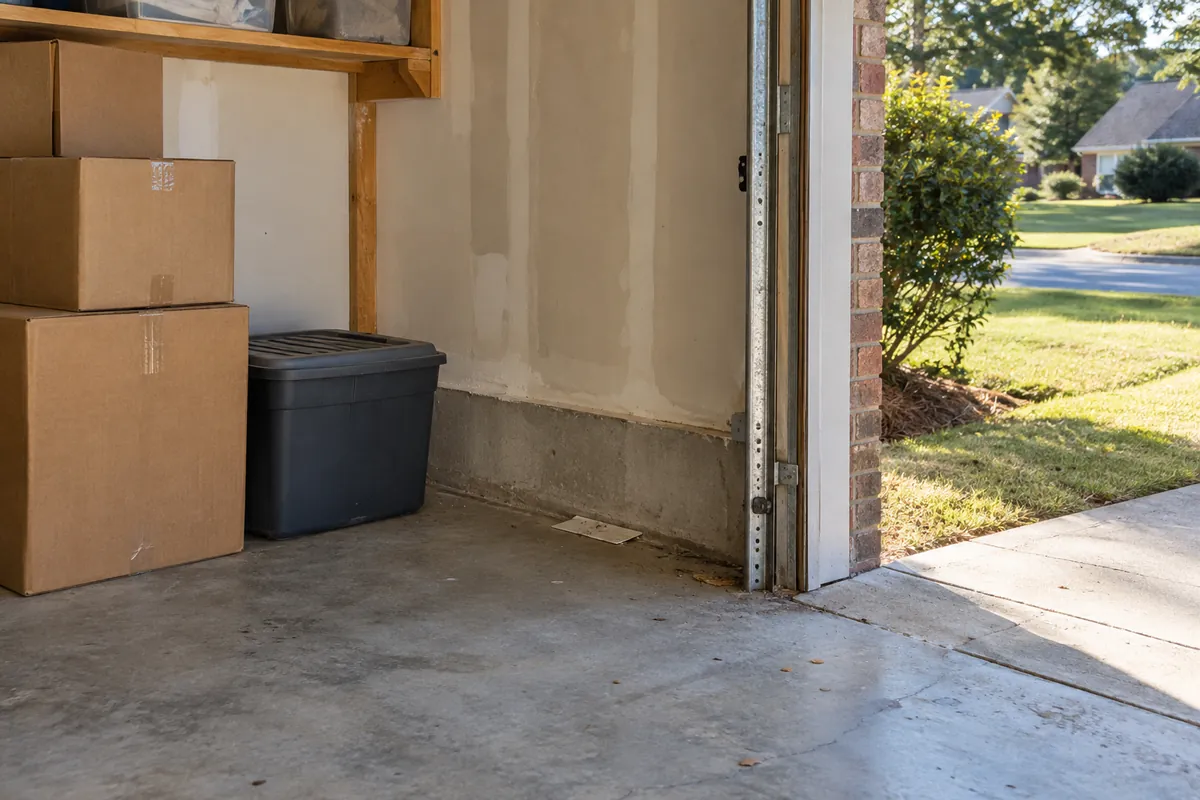
Spider control in Allen, TX is mostly a matter of sorting the harmless web builders from the few species that need attention, then reducing the insects spiders feed on. Woodpiles, sheds, garages and window frames shelter orb weavers, cellar spiders, wolf spiders and black widows, plus brown recluses in some regions. Describe what you found through Call Now, and you will reach an independent provider serving 2 ZIP codes around Allen.
Spiders worth knowing about
Black widow
This spider is glossy black with a red hourglass marking underneath. Cluttered, dark places that nobody disturbs, such as woodpiles, meter boxes and garages, are where it settles. Bites do not happen often, but when they do they matter medically.
Brown recluse
Light brown with a darker violin-shaped mark and six eyes in three pairs. Native to central and southeastern states and uncommon elsewhere. Hides in boxes, closets and storage.
Wolf spiders and cellar spiders
Wolf spiders are fast, hairy ground hunters that wander indoors. Cellar spiders have long thin legs and hang in corners and basements. Both are generally harmless.
How spider control is done
- Web and egg-sac removal by vacuum or brush
- Residual perimeter treatment around doors, windows and foundation
- Inspection of garages, eaves, attics, crawl spaces and window frames
- Sealing gaps, installing door sweeps and replacing white outdoor bulbs with warm-toned bulbs
- Dust in voids and cracks where spiders hide
Why spiders move into homes
Where there is food, spiders follow. Ants, flies, crickets and moths in a house bring spiders in to hunt them. Shelter and a way in come from clutter, boxes, stacked firewood, outdoor lights that draw insects, and gaps around doors and windows.
Spraying webs achieves less than cutting back both the insects and the hiding places, which is what actually lowers spider numbers.
Spider bites and when to see a doctor
A bite or a skin mark cannot be diagnosed on this website. If a bite brings severe pain, redness that spreads, cramping, fever or trouble breathing, seek medical care immediately; if you can catch the spider safely, bring it along in a sealed container.
Put on gloves before you move boxes, firewood or garden tools, and give any shoes or gloves kept in the garage a good shake.
Keep spiders out of the house
- Vacuum corners, window sills and the garage regularly
- Reduce outdoor lighting at night near entrances
- Seal gaps around windows, doors, pipes and vents
- Store items in sealed plastic bins instead of cardboard
- Keep firewood and debris away from the foundation
Questions to ask before you agree to any spider control
- What will you seal, remove or fix, and what stays my job?
- What species or problem did you find, and what did you see that proves it?
- What will you write down for me: scope, exclusions, follow-up and product list?
- How many visits are in the plan, and what happens if activity returns?
- Which products, baits or devices will you use, and where will they go?
- Who is on site, and can you show the state licence or applicator ID for the work?
How a spider control visit works, step by step
A good visit follows the same order every time, whatever the pest. Knowing the order helps you compare what each company offers and spot a visit that skips the first two steps.
- Inspection: the technician walks the outside first (foundation, vents, utility lines, eaves, fence lines, mulch) and then the inside (kitchen, bathrooms, garage, attic or crawl space).
- Identification: the species is named from the insect, droppings, damage or trail, because the right product and method depend on it.
- Plan: the provider explains what will be done, which products or devices will be used, and what you need to do before and after.
- Treatment or exclusion: the work is done in the places the inspection found, not by spraying every room.
- Follow-up: you get a date for the next check and a clear answer on what to report if activity returns.
Mistakes that make spider control harder
A handful of repeat mistakes explain nearly every pest treatment that does not hold, and knowing them in advance keeps you from making them.
- Skipping the entry points. Without sealing, new pests replace the old ones.
- Mixing products. Overlapping chemicals can reduce results and add risk.
- Judging results in a week. Many programs take two to four weeks and a follow-up to settle.
- Treating only where you see the pest. Activity you see is usually a fraction of what is hidden in walls, voids and soil.
- Spraying store-bought products around bait. Repellent sprays can make insects avoid bait they would otherwise eat.
Safety for children, pets and food
Pest products are regulated. In the United States each product carries an EPA-registered label, and the label is the legal instruction for where and how it can be used. Ask the provider for the product name and the label, and keep the paperwork you are given.
Safe handling starts with where the product goes. Locked bait stations keep children and pets out of reach, gel bait is pressed into cracks and voids instead of being left on counters, and each product has its own re-entry time. Ask when you can use the kitchen, play areas and pet bowls again, and clear away toys, bowls and food before the technician arrives.
What makes spider control different in Allen
Collin County city in the Dallas-Fort Worth area, north of Plano. Hot summers and mild winters; North Texas clay soil shifts and cracks, which opens paths for ants and termites.
Fire ants are common in North Texas lawns; mosquitoes surge after rain and around ponds and creeks. Subterranean termites are the main wood-destroying insect in Texas; swarm season is spring. What works in one climate or housing style can fall flat in the next, so ask each provider to explain how these local details shape the plan for your property.
Spider control across Allen and nearby cities
In Allen, Texas, Pest Control Allen serves 2 ZIP codes: 75002, 75013. Providers working in Plano, McKinney, Frisco, Wylie and Sachse also receive calls and requests. Each address is checked individually, which is why it helps to give your ZIP code on the call.
Use Call Now at the top of the page, describe what you found, and you will be connected with an independent provider in the area. The provider confirms the address, inspects the property and gives you the scope in writing.
Related help in Allen
If this is not quite your situation, these pages cover the neighboring questions: How Pests Get Into Allen Homes: Entry Points and Fixes; How to Choose a Pest Control Company; Scorpion Control; Pest Control Calendar for Allen: What to Expect Each Season. The service area list shows every nearby city and ZIP code covered.
Spider Control in Allen: common questions
Does spraying kill spiders?
Spiders that walk across a residual perimeter treatment are reduced by it, but those that avoid the treated surface may be missed. Taking down webs and sealing entries fills the gap.
Do spiders mean I have a bug problem?
Often, yes. Spiders hunt insects, so a steady population of spiders usually follows ants, flies, roaches or moths. Controlling those insects reduces spiders.
How often should spider control be done?
Seasonal perimeter treatments with a spring and fall focus work for many homes. Heavy pressure may need more frequent visits.
Are brown recluse spiders in my area?
Brown recluses are native to parts of the central and southeastern United States and are uncommon in many other regions. Many spiders called recluses are another harmless species. A provider can identify a specimen.
Should I remove spider webs?
Yes, regularly. Clearing webs and egg sacs stops the next generation from hatching and reveals where spiders keep coming back.
How can I tell if a spider is dangerous?
Black widows have a red hourglass marking and brown recluses have a violin-shaped mark and six eyes, but identification from memory is unreliable. If you are not sure, photograph it, avoid handling it and ask a professional.